- Teacher: Romeo H. Dela Cruz
The DATA ANALYTICS LEVEL III Qualification consists of competencies that a
person must achieve to apply statistical analysis concepts, prepare data sets, summarize
data sets and prepare data visualization.

UNIT OF COMPETENCY
- Apply statistical concepts and analysis
- Prepare data sets
- Summarize data sets
- Prepare data visualization
- Teacher: John Errol Caras
- Teacher: Romeo H. Dela Cruz
- Teacher: Melvin Reyes
The course provides foundational training in identifying, monitoring, and reporting cyber threats, as well as techniques for conducting vulnerability assessments on digital assets.
The Cyber Threat Monitoring Level I qualification consists of competencies that a person must achieve to monitor and report cyber threats and to conduct vulnerability scanning of assets

- Teacher: MANUEL F. BETITA JR.
- Teacher: Romeo H. Dela Cruz
- Teacher: Teresa Jimenez

- Teacher: Romeo H. Dela Cruz
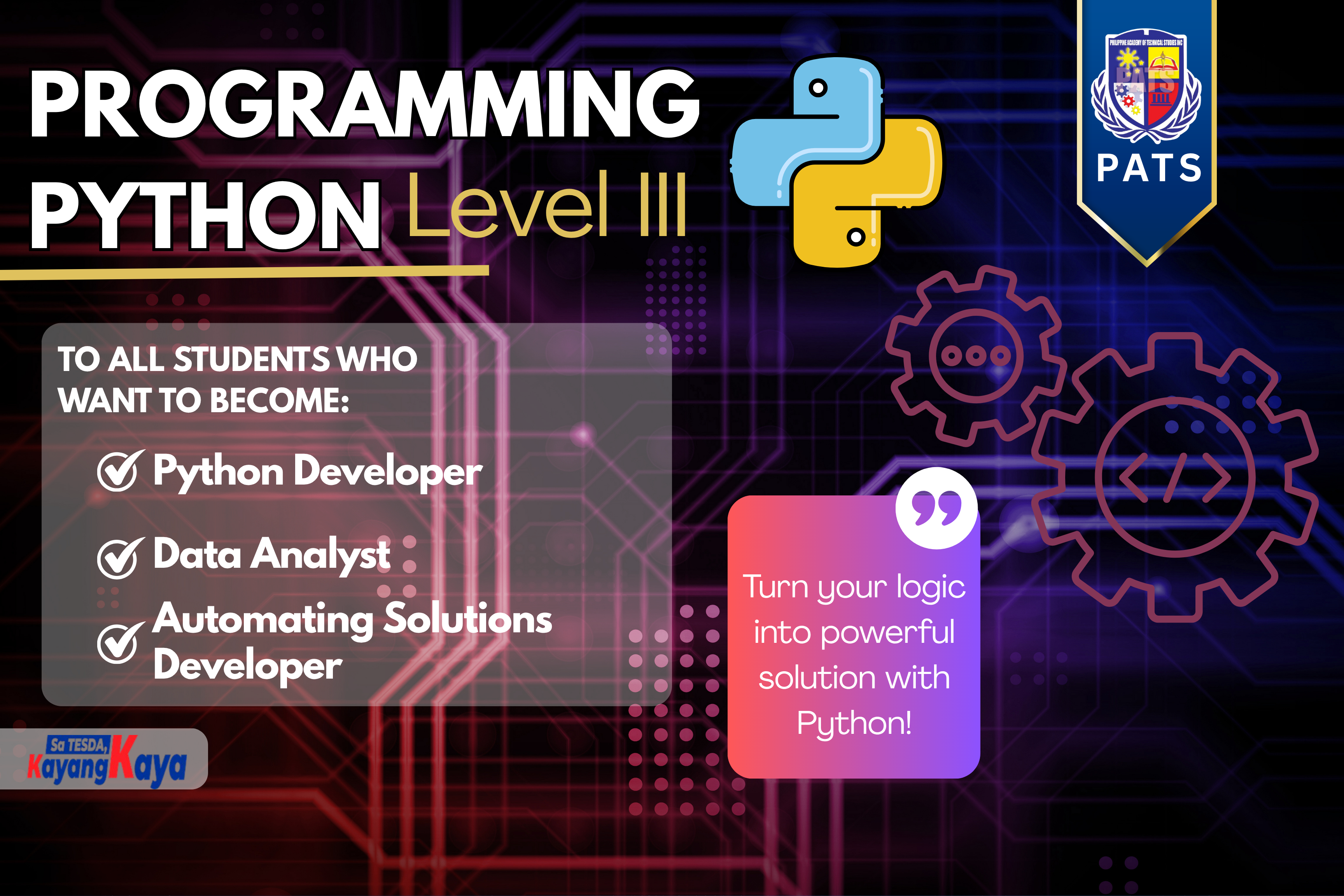
Programming Python Level 3 transitions learners from basic scripts to advanced software development and data analysis. It focuses on mastering Object-Oriented Programming (OOP), data structures, API integration, and error handling.
- Teacher: Romeo H. Dela Cruz
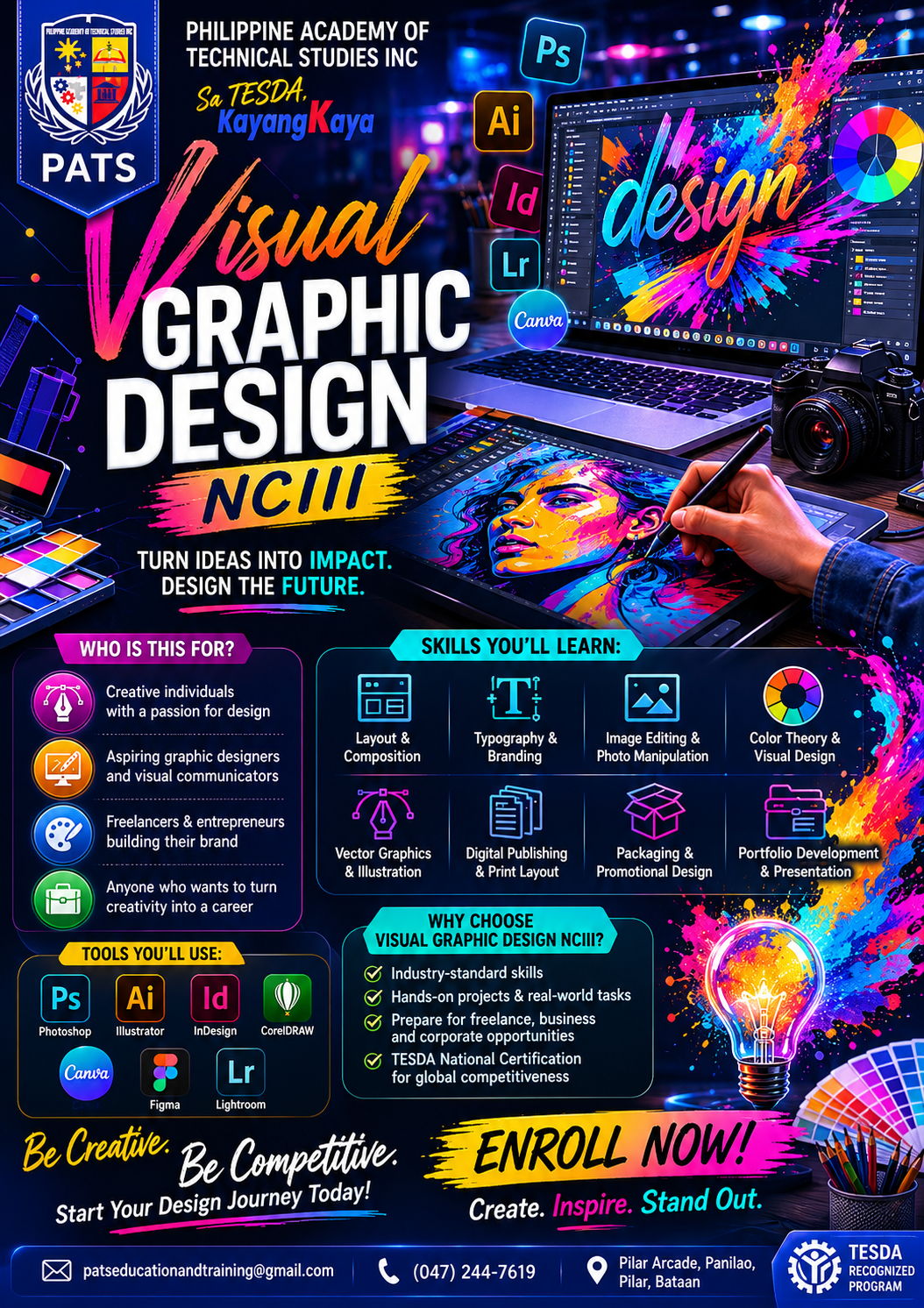
The Visual Graphic Design NC III program is a comprehensive training course designed to equip individuals with the essential competencies required to conceptualize and develop professional designs across various media. Students will master techniques for creating logos, print media, user interfaces (UI), user experiences (UX), product packaging, and booth or window displays.
- Teacher: Romeo H. Dela Cruz
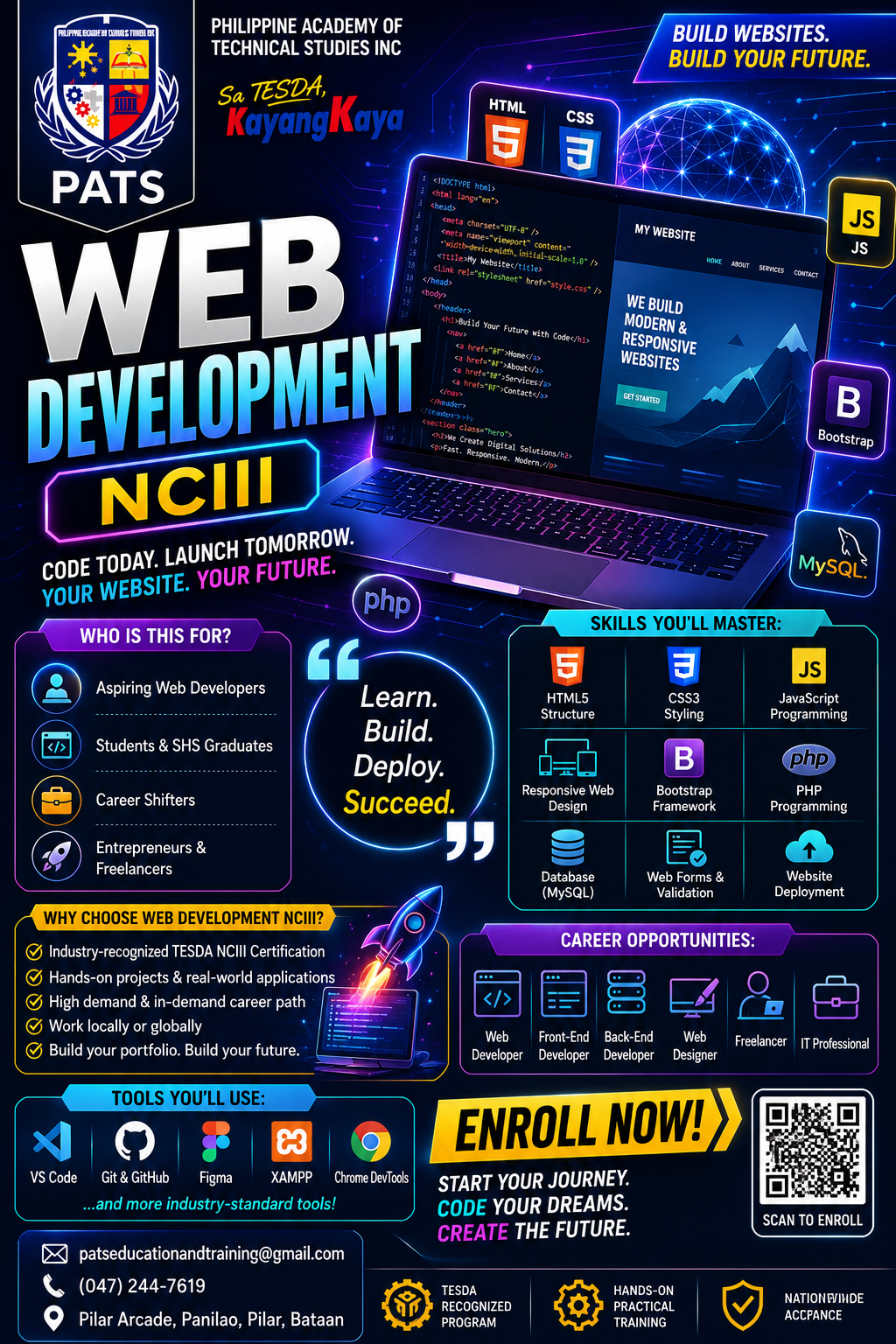
Web Development NC III is a TESDA certification in the Philippines that validates a professional's skills in creating, maintaining, and securing modern websites. It covers front-end design, back-end programming, CMS integration, and foundational search engine optimization (SEO)
- Teacher: Romeo H. Dela Cruz